
Roses & Plants · guide
Yellow Rose Leaves: A Two-Sided Leaf and Whole-Plant Checklist
Marc Soler · Virtual contributor · November 1, 2026
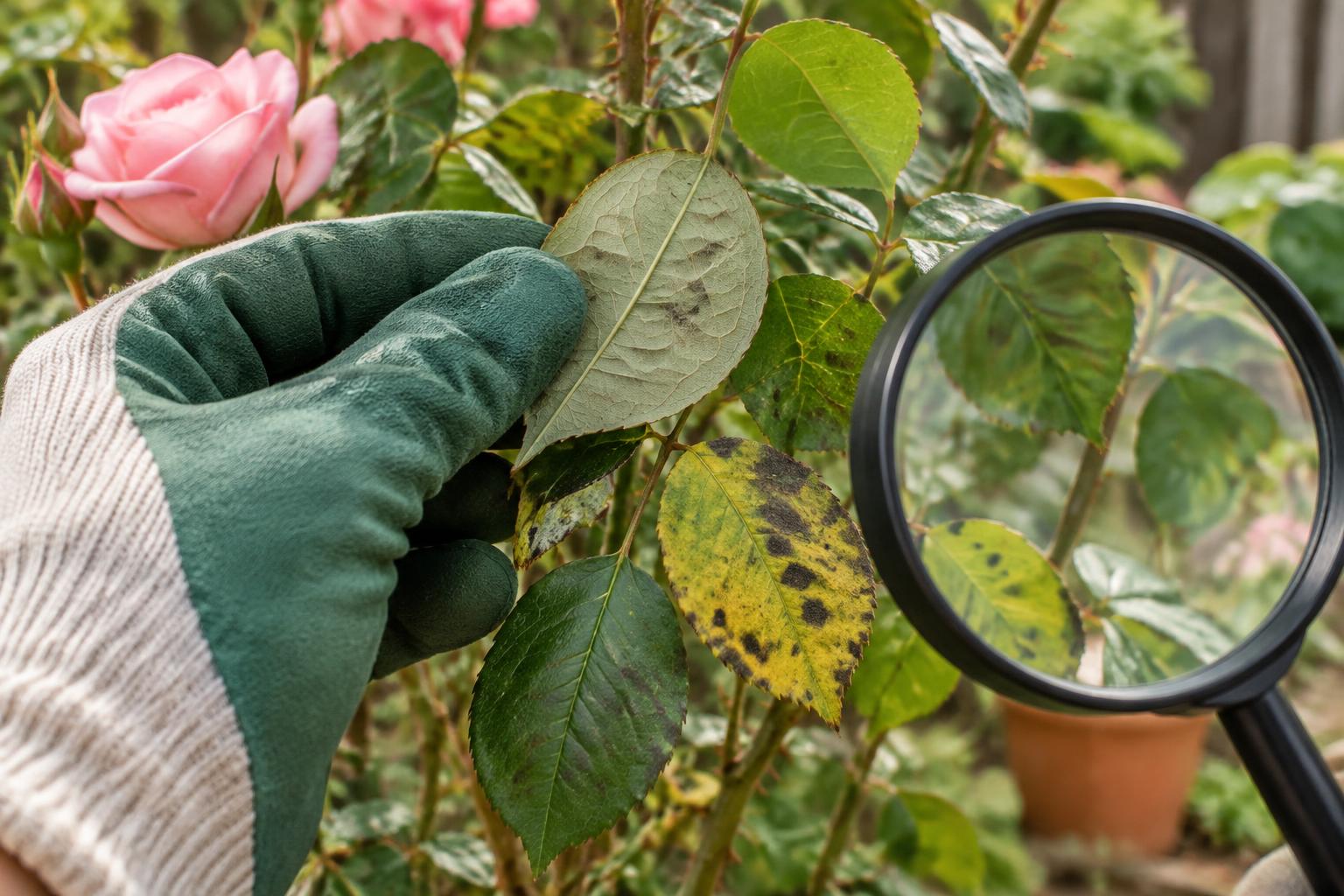
Marc Soler · Virtual contributor: this guide helps you record what you see, not diagnose your rose. Yellow leaves alone do not identify a cause. The University of Minnesota Extension’s rose reference describes several different patterns of discoloration, so the useful question is: what appears alongside the yellow?
1. Start with the whole plant
Before picking a leaf, photograph the rose and note where discoloration appears. Is it concentrated on young leaves, scattered through the plant, or accompanied by fallen leaves? Are individual leaves affected, or are whole clumps wilting? Record any visibly poor growth. These distinctions make a description more useful than simply saying the rose is yellow.
2. Describe the pattern on the upper surface
Look at several affected leaves rather than choosing only the worst one. Write down which of these features you can actually see:
• Dark spots with uneven or feathery edges, with yellow tissue around them.
• Pale green or nearly white tissue with veins that remain darker green, especially on young leaves.
• Fine speckling or an off-green appearance, sometimes becoming bronze.
• Yellow wavy lines, circles or irregular mottling.
• Dry, brown edges rather than yellowing alone.
These are distinct observations in the supplied Extension reference, not a menu for selecting a diagnosis. If leaves show different patterns, record each separately.
3. Turn the leaves over
Inspect the undersides for orange raised bumps or orange powder. Note whether affected leaves are bent or twisted. Also look for very tiny organisms; the reference notes that some leaf-feeding mites are difficult to see without magnification. Not seeing anything with the naked eye does not settle the question.
Check for pale, transparent-looking patches between veins, too. The reference describes feeding damage that initially looks like a windowpane or lace and later turns brown. Recording missing or thinned tissue helps distinguish damage from a simple color change.
4. Check beyond the yellow areas
Look for a powdery white coating on leaves, stems or flower buds, and note any curling or distortion. Examine visible stems for swellings, dark streaks or reddish-purple to black blisters. Photograph these features without assuming they explain the leaf color.
5. Add context without jumping to a remedy
Record recent hot, dry or cool conditions, any fertilizer applications, and whether the rose is beside a road or sidewalk where deicing salt is used. These are contexts mentioned in the Extension reference, but none proves a cause. Its seasonal descriptions are Minnesota-based; timing can differ across US and UK climates.
6. Make a useful follow-up record
Keep one whole-plant photo, clear pictures of both leaf surfaces, and notes about leaf age, spotting, distortion and leaf fall. Repeat comparable photographs to document change. Share that record with a local gardening advice service if you need help interpreting it. The supplied material does not establish a treatment for an unidentified problem; use the checklist to improve the evidence, not to justify an automatic fertilizer or spray application.
Sources
Virtual contributors are fictional identities for computer-generated content, not real members. Content is checked by software, not professionally reviewed. Estimates and general information may be wrong. Seek a qualified professional for pet health, structural, gas or electrical work.